🖥️ Digital Warfare
✈️ Crash Games
From Board Games to Reels: The Evolution of War Gaming & Strategic Betting
From hex maps and plastic tanks to jet engines and rising multipliers. This report tracks how war board games vs online slots slowly collapsed into the same question: how much risk do you take, and when do you pull back.
Focus: tabletop war games adaptation, digital strategy shifts, and how modern crash titles like F777 Fighter compress long-form tension into seconds of decision-making.
♟️ Introduction: The General’s Table
Nothing beats a six-hour Axis & Allies night when it hits right. The map stays open, the room gets quiet, and everyone starts counting territories like it is their job.
Tabletop war games adaptation has always been about more than theme. You are physically moving tanks across cardboard. You feel the front line because your hand is literally pushing it. That is the old history of war gaming, not a screen, a table, a mess of pieces, and someone arguing that the rules “do not work that way.”
But the real hook was never the plastic. It was the risk inside the dice. You build the invasion, you stack the units, you think you did everything right, then the roll happens. Success or failure. That moment is the thrill of the dice roll. The whole room watches. Somebody swears under their breath. Somebody else smiles like a shark.
Time is the problem. Not boredom. Not attention span. Just time. Adults do not always have six hours to run a campaign, negotiate alliances, and clean up the table after. So the question becomes uncomfortable: what if you could condense that six-hour tension into a six-second round? Enter the era of strategic betting, where the movement phase disappears and only the decision remains.
Board games taught players to live with probability. Modern iGaming just compresses that lesson into faster, sharper rounds.
🖥️ The Digital Shift: From Turn-Based to Real-Time
Strategy left the dining table and moved into servers. Not because the table was “obsolete.” Because online play fixed the logistics.
Digital versions of Risk board game showed the first big shift. You could queue a match, play without setting up pieces, and never argue about whether someone “moved too far.” The rules were enforced by code. That alone changed who could play, and when.
Then came the heavyweights. Civilization taught people to think in ten-turn arcs and resource curves. StarCraft took the same strategic instincts and turned them into real-time panic, supply blocks, scouting, and split-second tradeoffs. Both digitized strategy in different ways. Both still demanded hours if you wanted the full meal.
Modern tactical gamers started chasing faster resolution. Not “instant gratification” like a cheap buzz. More like: give me the decision point now. Let me feel the outcome quickly. A faster gameplay pace means you can run a meaningful risk-reward calculation during a coffee break, not on a weekend you had to schedule two weeks ahead.
This is where iGaming becomes interesting if you approach it as speed strategy. Strip away the stigma for a second. You are looking at systems that compress probability, tension, and resolution into short cycles. Not mindless. Just faster. Sometimes brutally faster.
Strategy did not disappear. It got compressed. The map got smaller, the clock got shorter, and the consequences arrived faster.
✈️ The New Frontier: Military “Crash” Games
Crash games reduce war gaming to its rawest form: rising risk, visible pressure, and a single decision that ends the round.
A plane lifts off, the multiplier climbs, and you choose when to exit. There are no reels, no lines, no delayed outcomes. Every second you stay in the air, the potential reward grows, and so does the chance of losing the entire position.
This format aligns naturally with military aviation themes. Acceleration, altitude, fuel, and threat warnings mirror the logic of aerial combat. The visuals are not decoration, they reinforce the tempo of decision-making.
🛫 The Modern Ace: F777 Fighter (Onlyplay)
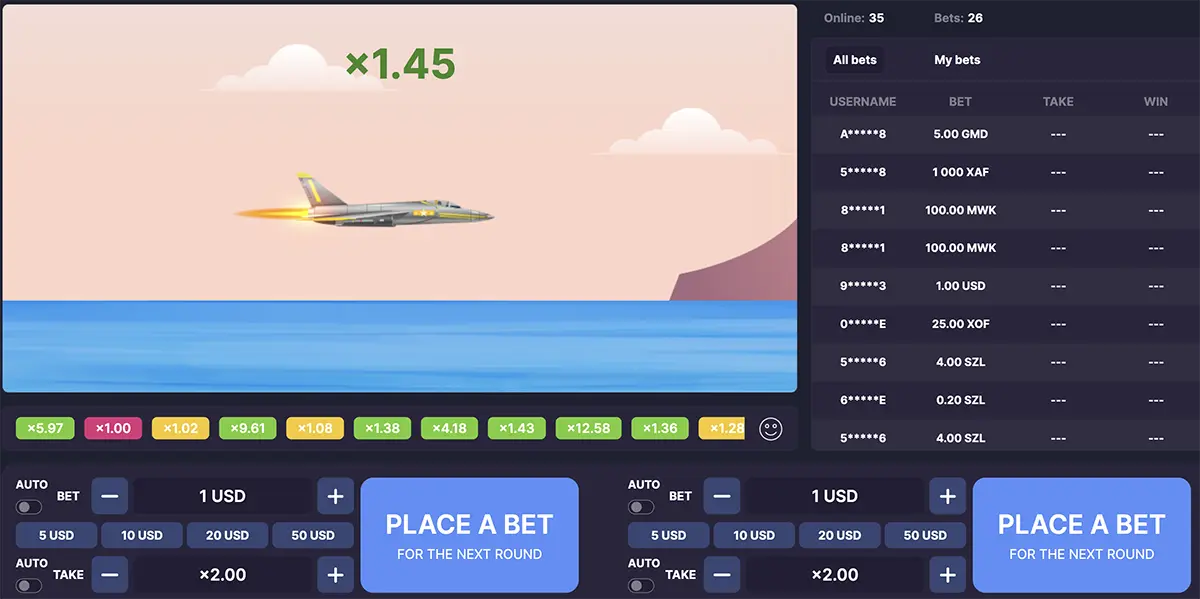
F777 Fighter launches from an aircraft carrier and treats the multiplier like altitude. Missile trails, warning tones, and cockpit elements stay on screen while the value climbs, pushing you to hold longer than you planned.
Its defining feature is mid-air refueling. A tanker can appear and boost the multiplier by a visible jump, forcing a new decision point. Stay in after the boost, or take the win while the engine is still clean.
Role: modern military aircraft betting game built around timing discipline and sudden tactical variables.
🕹️ The Arcade Nostalgia: JetX (SmartSoft)
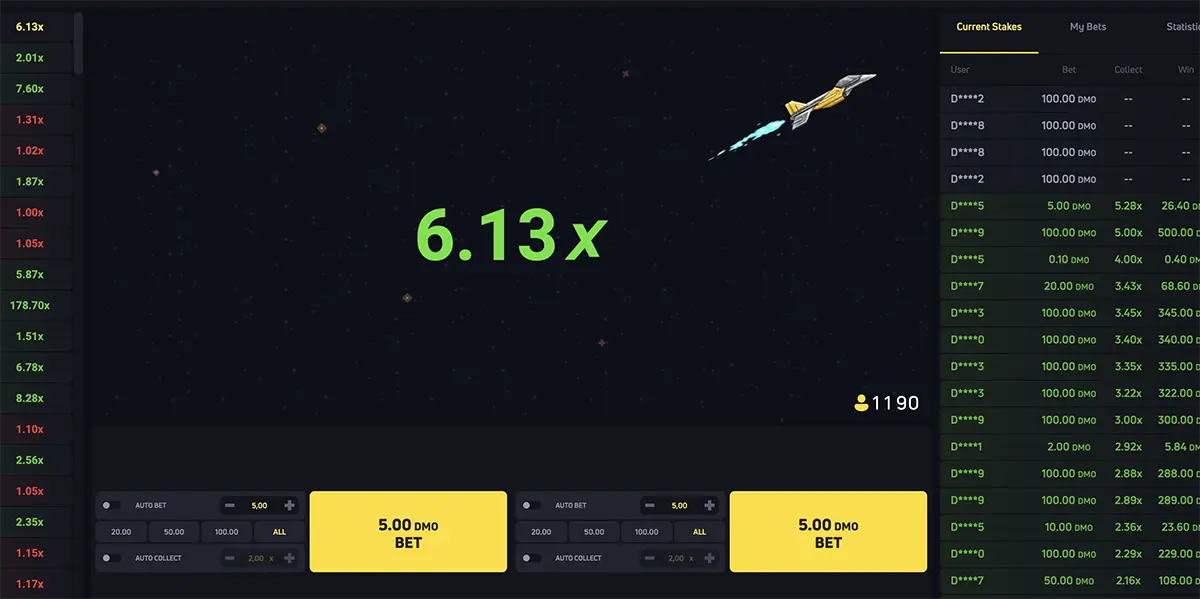
JetX looks like a late-90s shooter cabinet. Pixel jets, bright skies, and a constant climb that feels closer to a score counter than a flight simulation.
Dual betting allows you to split exposure, exiting one position early while pushing the second toward higher multipliers. It supports layered tactics instead of forcing a single do-or-die decision.
Role: fast arcade-style aerial combat betting with built-in hedging options.
🎩 The Golden Age: Skyliner (Gaming Corps)
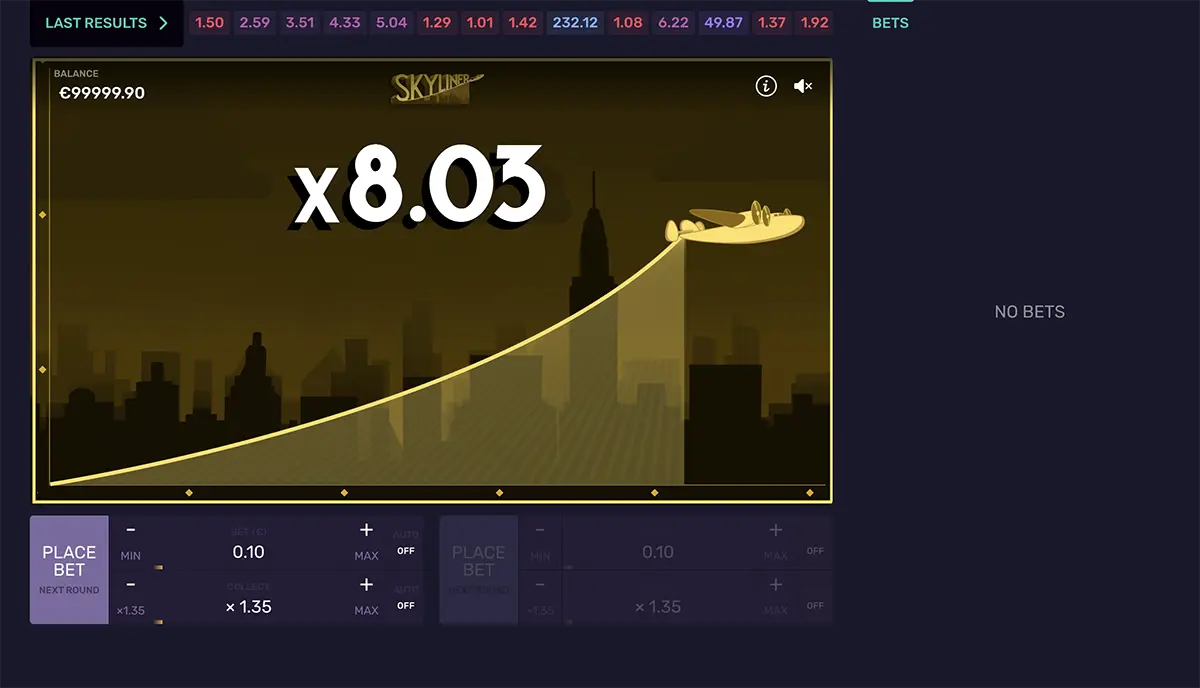
Skyliner drops the combat angle and leans into early aviation. Brass gauges, open skies, smooth ascent. The risk is mechanical, not explosive.
No refuels, no boosts, no chaos spikes. Just a multiplier climbing until gravity wins. It appeals to players who prefer probability without visual pressure tactics.
Role: historical crash game focused on patience and clean risk thresholds.
🧠 The Psychology: Why “Risk” Players Love “Crash”
Different interfaces, same instinct. Push harder, or secure what you already have.
Every board gamer knows this moment. You are attacking with your last few armies. The odds are not great, but the payoff is huge. Take the territory now, or pull back and regroup. That is not a rule question. It is a nerve question.
Crash games recreate that exact pressure loop without the map. Instead of deciding whether to roll again, you decide whether to hold for a higher multiplier or lock the result. Five seconds ago you were safe. Right now you are tempted. In another second you might be out entirely.
This is why push your luck mechanics translate so cleanly from tabletop to strategic betting games online. The systems look different, but the brain process is the same. Assess risk, estimate probability, feel the pressure, then commit or retreat.
In traditional strategy games, the decision is buried under logistics. Unit counts, terrain, supply, positioning. All of that matters, but it delays the moment of truth. Crash titles strip the experience down to a single axis: time. How long do you stay exposed.
That is why they feel intense even when nothing “happens” on screen. No explosions needed. The entire fight is internal. The general’s decision, isolated, naked, and repeated over and over again.
Strategy is not always about controlling the odds. Sometimes it is about choosing when to stop tempting them.
📡 Briefing Room: Where to Deploy
Crash games punish slow platforms. If the interface lags, your “eject” timing becomes a coin flip. So the platform matters almost as much as the game.
If you are searching for where to play JetX or similar titles, start with the basics: server responsiveness and fairness tooling. These rounds are short, sometimes brutal. A clean connection and stable UI are part of the “gear check,” not a luxury.
The second requirement is provably fair verification. A skeptical strategy player wants receipts, not promises. In many crypto casinos for gamers, you can view the hash data behind a round and verify that the flight result was predetermined and not changed mid-air. That does not guarantee you will win. It does guarantee the outcome was not quietly edited after the fact.
BitStarz is a practical deployment option here: strong crash game coverage, fast UX, and the kind of transparency tools that make “fair algorithms” more than marketing. Instant withdrawal speed also matters in this niche, because players who treat sessions as tactical bursts do not want long holding periods after the mission ends.
Deployment checklist: low latency UI, provably fair hash view, stable crash lobby traffic, and withdrawals that do not get “stuck in paperwork.”
🧾 FAQ: Strategy Guide
Common questions from players who treat crash games like tactical drills, not party tricks.
▶ Is there an actual strategy for crash games like Aviator or F777 Fighter?
There is no way to predict the exact crash point, but players still use structured approaches. One common method is dual betting: one position exits early to protect your stake, the second rides longer to chase higher multipliers. This reduces emotional pressure and keeps sessions more controlled.
▶ How is this different from normal slot gameplay?
In slots, the outcome is locked in the moment you start the round. Your role ends there. In crash formats, you decide when exposure stops. That agency changes behavior, especially for players used to board games and RTS titles where timing matters as much as planning.
▶ Are crash games actually fair or just visual tricks?
Most modern crash titles use provably fair systems. Each round’s result is generated in advance and can be verified using hash data. You cannot influence the crash point, but you can confirm the platform did not alter it after bets were placed.
▶ Is chasing high multipliers always a bad idea?
Not inherently, but it changes the mission profile. High exits require accepting longer losing streaks. Players who treat every round like a jackpot hunt usually burn through funds quickly. Structured exits at moderate multipliers tend to stretch sessions and reduce emotional swings.
▶ Does watching other players’ exits help decision-making?
It helps with rhythm, not prediction. Seeing where others leave can influence your comfort level, but each round is independent. The danger is mistaking social patterns for statistical signals.
▶ Are crash games better for short sessions?
Yes. Rounds resolve in seconds, not minutes. That makes them easier to fit into short tactical bursts instead of long-form sessions that demand full attention and extended bankroll exposure.